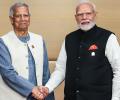
Bangladesh's interim government chief, Muhammad Yunus, has raised the issue of ousted prime minister Sheikh Hasina's extradition from India during a meeting with Prime Minister Narendra Modi in Bangkok. However, Indian officials have denied that the extradition request was discussed. The meeting has sparked controversy with differing accounts of the discussions.

A Bangladesh court on Thursday sentenced deposed prime minister Sheikh Hasina to 21 years in jail in three corruption cases related to irregularities in allocations of land in a government housing project.
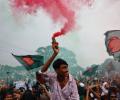
A protest march towards the Indian High Commission in Dhaka was halted by police, prompting India to express strong concerns about the security of its mission. The protesters demanded the extradition of former Prime Minister Sheikh Hasina and others involved in the 'July Uprising'.
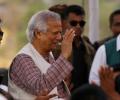
It was a meeting at the official level, not at the political level, Hossain said, adding that there was no element of formation of any alliance.

Foreign Secretary Vikram Misri arrived in Dhaka on Monday on a day-long visit to hold talks with his Bangladeshi counterpart, amid strained bilateral ties since August following the ouster of prime minister Sheikh Hasina.

A Bangladesh court has convicted former Prime Minister Sheikh Hasina and British MP Tulip Siddiq in a land scam case, sentencing them to imprisonment. The verdict also includes other government officials and Hasina's sister, raising questions about extradition and political motivations.
Helen said the US embassy in Dhaka will resume this week its consular service to expedite visa processing.
Hossain said they will "always try to maintain good relations" with India.
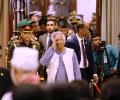
People in Bangladesh have welcomed the new interim government led by Nobel laureate Muhammad Yunus, hoping it would restore order, end repression and hold a fair election to facilitate a democratic transition of power.
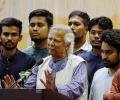
Yunus, 84, was administered the oath of office by President Mohammed Shahabuddin at a ceremony at the presidential palace 'Bangabhaban'.
